
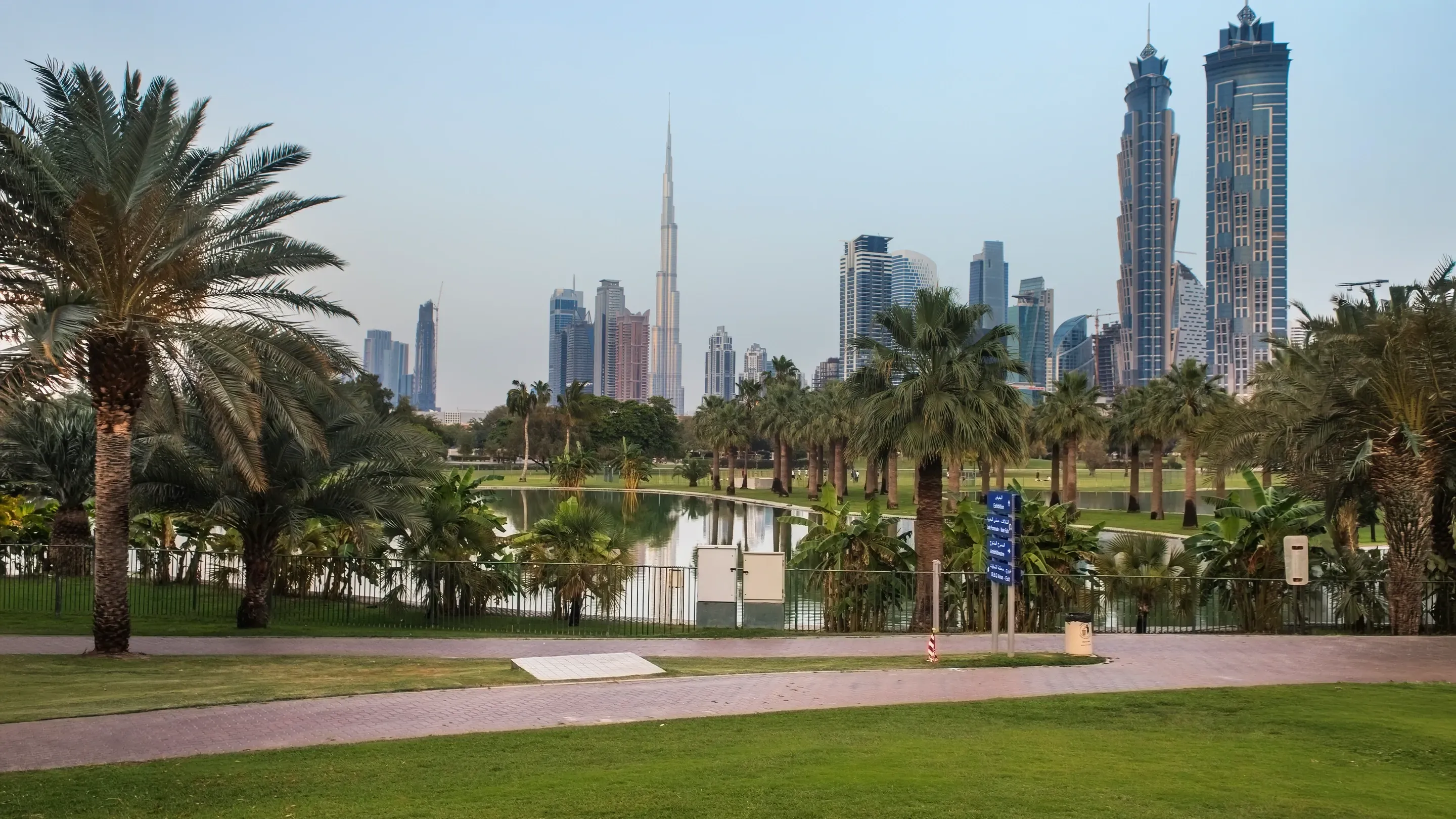

Dubai’s skyline has always been part of the conversation. In 2026, the focus has shifted to what surrounds it.
Parks. Coastal walkways. Urban forests. Public beaches. Green mobility corridors. Wellness-driven communities.
The recently announced Dubai Blue & Green Infrastructure Roadmap 2030 is not a cosmetic city upgrade. It is a long-term urban planning strategy tied directly to the Dubai 2040 Urban Master Plan, backed by AED 4 billion in investment and designed to reshape how people live across the city.
For buyers and investors, this matters for one reason in particular: infrastructure changes property demand.
Historically, areas connected to major transport, lifestyle, and public realm improvements in Dubai have seen stronger long-term absorption, rental interest, and price appreciation. The 2030 roadmap expands that thinking further by positioning nature, wellness, and accessibility as core infrastructure assets rather than afterthoughts.
For anyone considering investing in Dubai real estate, the roadmap offers insight into where the city is heading next and why future-ready communities in Dubai are gaining stronger investor attention.
Why Dubai’s Blue & Green Infrastructure Roadmap Matters to Property Buyers
Dubai Municipality launched the roadmap during the World Governments Summit 2026 as part of a broader sustainability and urban resilience strategy.
According to Dubai Municipality, the roadmap includes:
- AED 4 billion in planned projects
- 15+ major infrastructure developments
- 1.5 million new trees over five years
- 120 new parks across nearly 3 million sq. m.
- Expansion of public beaches, waterfronts, and cycling networks
- Over 200 new sports and recreational facilities
The strategy aligns with a growing global trend where cities investing heavily in eco-friendly urban development tend to attract stronger long-term residential demand.
A researchgate report found that green-certified and wellness-oriented developments across global urban markets continue to outperform conventional residential projects in tenant preference and occupancy stability.
Dubai is now scaling that thinking citywide.
1. Dubai Plans to Plant 1.5 Million Trees
One of the largest announcements within the roadmap is the planned planting of approximately 1.5 million trees over the next five years.
This is more than beautification.
Tree coverage directly impacts urban cooling, air quality, pedestrian comfort, and neighbourhood liveability.
2. 120 New Parks Will Expand Community Living
Dubai plans to introduce 120 new parks covering close to 3 million square metres.
Modern buyers are evaluating neighbourhoods differently than they did a decade ago.
- Access to open space
- Walking areas
- Wellness zones
- Recreational facilities
These have become central to residential decision-making.
3. Beach Facilities Will Increase by 400%
Dubai Municipality plans to expand beach facilities and services by 400%, alongside major improvements to waterfront accessibility.
The city’s coastline has always carried premium real estate value. What changes now is accessibility.
4. Public Beach Capacity Will Expand by 150%
Dubai also plans to increase public beach capacity by 150%, creating more usable public leisure infrastructure across the emirate.
For investors, that translates into:
- Better resident retention
- Stronger family appeal
- Increased tourism-linked demand
- Higher desirability for long-term rentals
5. Three New Beach Destinations Will Open Every Year
The roadmap also includes the addition of three new major beach destinations annually.
This steady rollout approach signals consistency in long-term urban planning rather than isolated flagship projects.
6. Coastal Walking and Cycling Tracks Will Expand by 285%
Dubai plans to extend beachfront cycling, jogging, and walking tracks by 285%.
Properties within connected pedestrian ecosystems often experience:
- Higher occupancy stability
- Better lifestyle positioning
- Increased end-user demand
- Stronger rental competitiveness
7. More Than 45 Landscaping Projects Will Improve Urban Aesthetics
The roadmap includes over 45 landscaping and urban beautification projects across Dubai.
Urban aesthetics influence more than appearance. They shape perception, movement patterns, and community identity.
8. Over 200 Sports and Recreational Spaces Are Planned
Dubai Municipality will introduce more than 200 sports and recreational facilities integrated within green networks.
Today’s buyers are looking beyond apartment layouts. They evaluate:
- Community usability
- Outdoor accessibility
- Family-friendly planning
- Recreational convenience
- Mental wellbeing support
9. Nature Is Becoming Part of Core Infrastructure
One of the most important aspects of the roadmap is philosophical rather than numerical.
Dubai is positioning nature as active infrastructure.
- Green corridors
- Mangrove integration
- Public waterfront systems
- Biodiversity initiatives
- Climate resilience planning
10. Eco-Tourism and Lifestyle Economies Will Expand
The roadmap also supports eco-tourism destinations and nature-oriented recreational zones.
This creates secondary economic activity around:
- Hospitality
- Short-term rentals
- Food and beverage
- Retail
- Lifestyle services
What This Means for Tranquil Developments
As Dubai shifts toward more human-centred urban planning, communities designed around wellness, accessibility, and thoughtful living become increasingly relevant.
Projects like Blossom 40 in Majan and Blossom 76 in JVC reflect many of the priorities shaping Dubai’s next phase of urban growth:
- Wellness-focused amenities
- Connectivity-driven locations
- Community-centric planning
- Lifestyle integration
- Long-term liveability
Blossom 40, located within Majan Dubai Land, benefits from proximity to expanding infrastructure corridors, green spaces, and established family-oriented districts.
Blossom 76 in JVC sits within one of Dubai’s highest transacting residential communities, supported by rental demand, accessibility, and evolving infrastructure growth.
For buyers exploring investing in Dubai real estate, the conversation is increasingly moving beyond square footage alone.
The focus now is on how a community supports everyday living over the next decade.
FAQs
Why is Dubai investing heavily in green infrastructure?
Dubai is aligning its long-term urban planning with sustainability, climate resilience, public wellbeing, and quality-of-life goals under the Dubai 2040 Urban Master Plan.
How does eco-friendly urban development affect property value?
Communities with strong green infrastructure, parks, walkability, and wellness amenities often experience stronger residential demand and better long-term occupancy trends.
Are future-ready communities in Dubai attracting more investors?
Yes. Investors increasingly prioritise communities that combine infrastructure, lifestyle convenience, sustainability, and long-term liveability.
How does Dubai infrastructure growth and property value connect?
Large-scale infrastructure investment often improves accessibility, community desirability, and resident demand, which can positively influence property appreciation over time.
Is Majan considered a growing investment location in Dubai?
Majan continues attracting buyers due to affordability, connectivity, improving infrastructure, and growing residential demand from families and professionals.
Why are wellness-focused developments becoming more popular?
Post-2020 buyer behaviour has shifted toward communities that support outdoor living, recreation, mental wellbeing, and work-life balance.
Conclusion
Built with thought means understanding that property decisions are rarely just financial. They are personal, practical, and long-term.
As Dubai reshapes its urban future around sustainability and liveability, buyers are paying closer attention to the communities that already reflect those values today.
Disclaimer: Statistics, infrastructure targets, timelines, and public announcements referenced in this article are based on publicly available information released by Dubai Municipality, regional publications, and government communications as of May 2026. Actual implementation timelines, infrastructure outcomes, and market performance may vary.
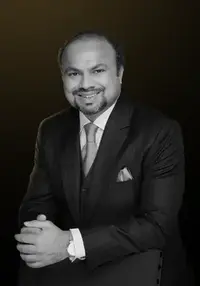
Author: Dr. Sharad Nair
Co - Founder & Chairman, Tranquil Developers


